Perspectives · 5 min read
Robots, Man, and the Image of God
Did you know that Robin Williams played a robot named Andrew in a movie called Bicentennial Man? It is not considered one of his greatest works like his role as Dr. Sean Maguire in Good Will Hunting which won him an Oscar. Williams in the 1997 film won Best Supporting Actor playing a psychiatrist counseling Matt Damon, the movie’s protagonist, who was a troubled youth, but also a mathematical savant. The film offers a humorous and at times intense look at the relationship between these two characters, but beyond their dialogue, the movie has us contemplate the real drama that exists much deeper within human relationships and human frailty. In comparison, the other less known movie of Robin Williams is a science fiction drama that takes the audience on a journey with the greatness of human achievements that befriends its own technology, and helps it realize its dream of becoming a man. Ironically, for us today the futuristic fiction film which was based on a novel by Isaac Asimov seems to be no longer fiction, and human genius in mathematics now appears to be something of the past. In this article we are going to reflect on the drama that exists between humanity and technology and clarify on what is fiction and what is not.
Andrew the Robot
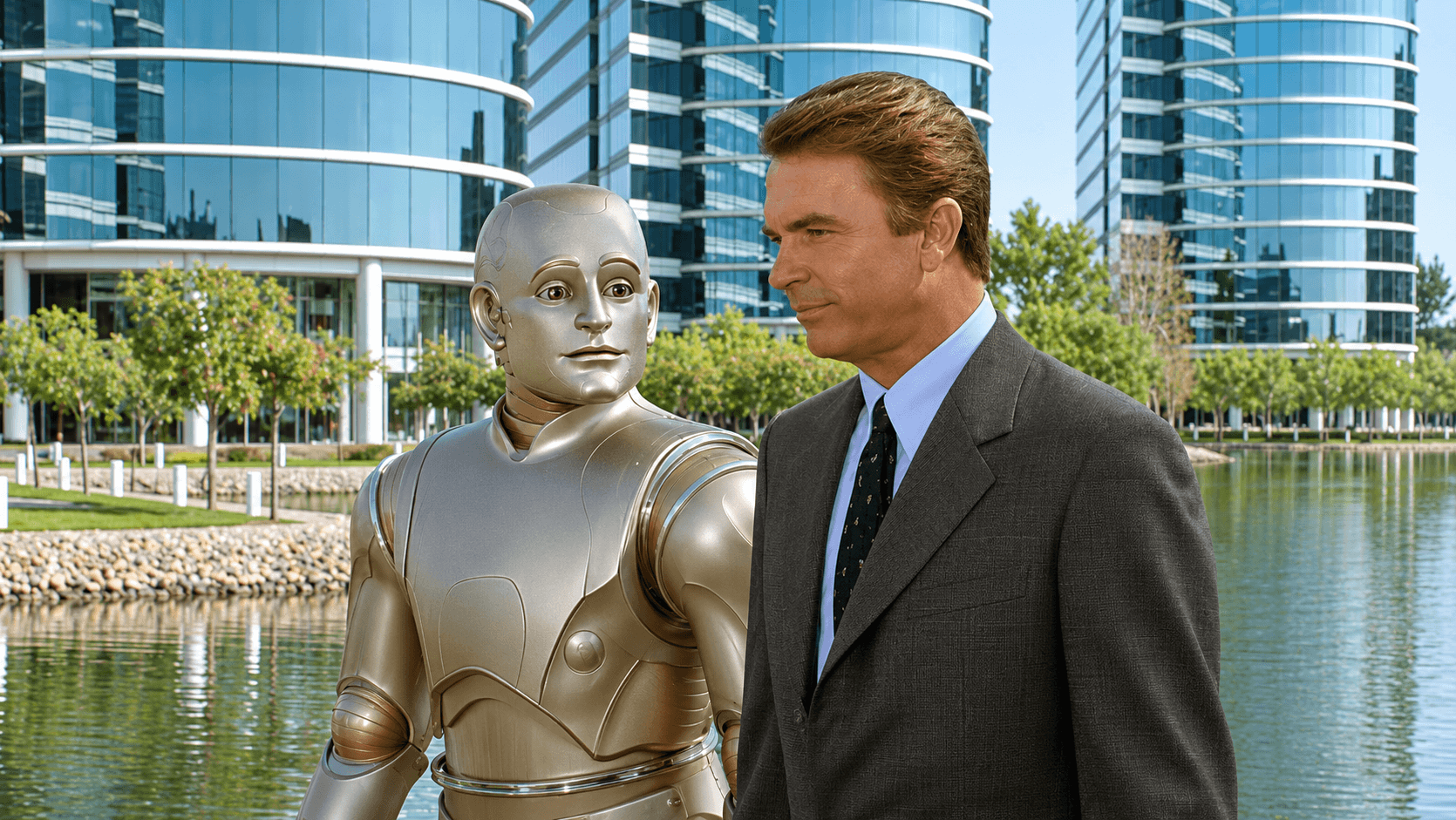
To begin, what does bicentennial actually mean from the movie title? It means 200. The movie is called 200 year old man. Why? That is exactly how old Andrew was when he “died.” Spoiler alert. The movie ends with a robot, who over 200 years of technological advancements was able to modify his interior wiring for artificial organs, a central nervous system so he could eat, feel, and experience intimacy. He was given an exterior of silicon-like skin, and he had added expressive facial features. He also altered his positronic1 brain to age and decay so he would die making him mortal, which was the final requirement to be declared a man by the World Congress. At the end of his life, all the updates he had received made it impossible to recognize and know that he was once a mechanical robot made of metal. He most certainly appeared human, but did he act human? In the movie, Andrew’s positronic pathways had experienced a random “one-in-a-million” fluke during manufacturing. Somehow he did not follow robotic logic. His “brain” developed genuine curiosity, creativity and emotional depth. He desired to learn, to form relationships with others, and from his spontaneous and autonomous personality, he was granted legal freedom to follow his own path. Little by little we watch how a robot grows in intelligence and develops human behaviors so that when he finally looks human, his developed personality also resembles a self-aware person with an appearance of a freewill and a human identity.
Adam the Man
What is it that makes us human? For Andrew’s final acceptance into the human race, he had to relinquish his immortality. The answer to the question according to the movie is clear: To be ultimately human is to simply be able to die. There is nothing else beyond that for Andrew the robot. In the 200 years of his life, he never expresses a belief in God. He explores humanity and the world through reason and chooses a form of morality as his final end rather than God. Does this sound familiar? It should. These materialistic and humanistic views that Andrew built his life around and died for are actually what oppose the true beauty of what it means to be human. Flesh and bone are certainly part of being human. The ability to move, experience emotions and to reason are also features that we find in our humanity. Andrew shared some of these capacities, but these do not ultimately make us human. The true essence of our humanity that is distinguished from everything else is found in Adam who God created in His image, and after His likeness (Genesis 1:26). Each of us bears this same image and likeness, but what does this mean? To be human is to be created to know and to love God. Humanity is made to be in communion with God, but also with one another. God said, “it is not good for the man to be alone” (Genesis 2:18). God also gives humanity two very specific commands: “be fertile and multiply; fill the earth and subdue it.” If we look back at Andrew, he was created in the image of his human inventors. He was never programmed to know or love God. His fellowship and participation with others depended on being purchased and used. When he actually does reach the point of looking and acting human he never was able to reproduce. His work of subduing never reached the earth, only his own robotic nature. How does this apply to us today?
Artificial Intelligence
Today, we are faced with all the same questions that the movie Bicentennial Man sought to answer with the birth of Artificial Intelligence. Once again, we question what it means to be human in the face of AI. Recently, Yuval Noah Harari, the author of Sapiens: A Brief History of Humankind on an interview that aired on October 17, 2026 said the following:
“We are the cows of the future…Just as cows can’t understand the financial system that controls their lives today, we will not be able to understand the AI financial system that will control our lives in 10 or 20 years.2”
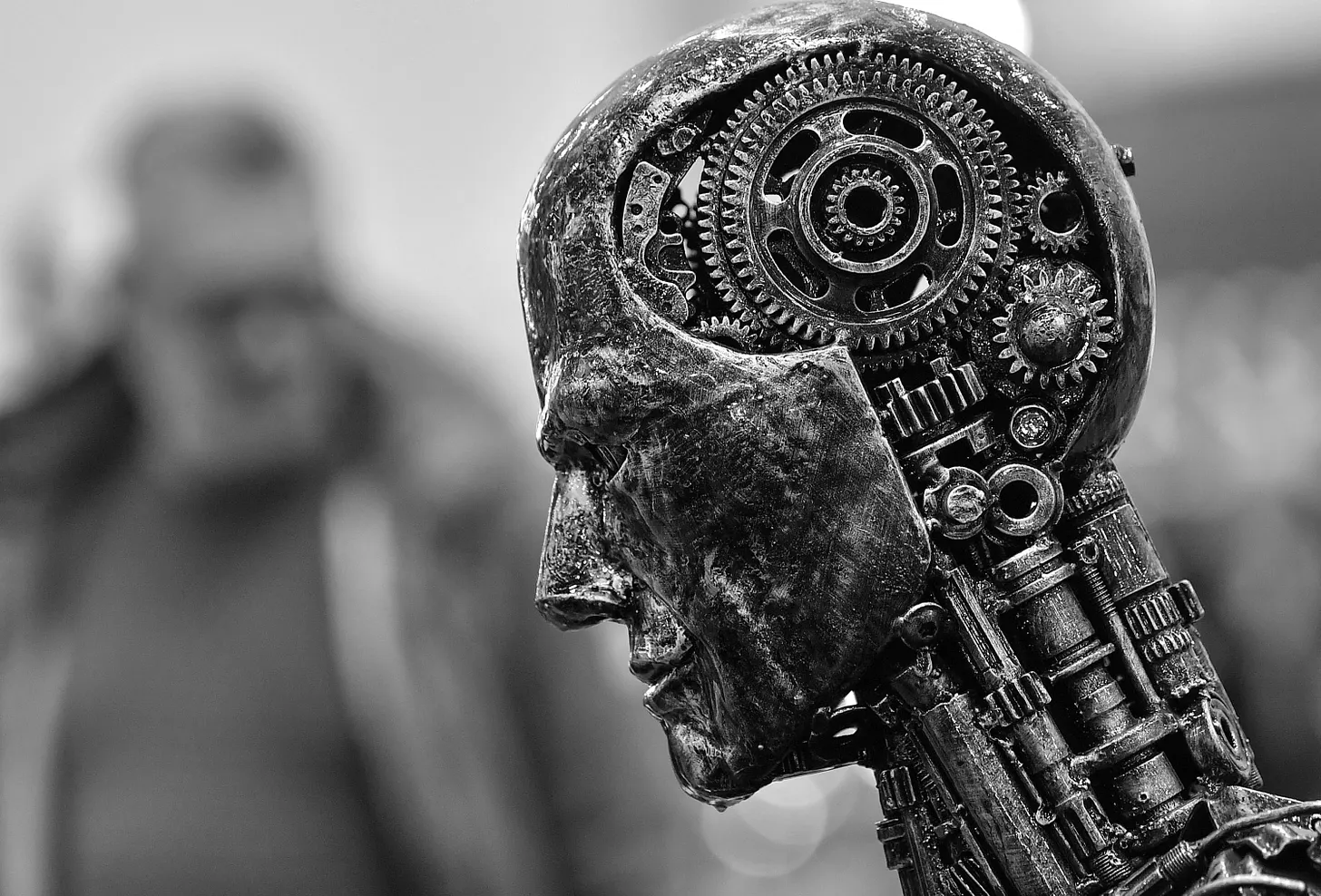
People like Yuval and robots like Andrew do not comprehend the intelligence and abilities of technology like AI which is built to possess data and process it cannot be compared to our humanity that is possessed by Christ who makes us His own and shares with us His life, death, and resurrection. We are not going to be cows because no technology can take away the dignity that God gave us when He created Adam. AI in a robot like Andrew is never going to be human because even if it one day chooses to die so to be “more human”, the true essence of our humanity is our body AND human soul to live in the presence of God.
How About Those Apples?
As much as the minority want to argue about what it means to be human, we can just listen to Robin Williams' most famous speech where we find his character Sean and Will are on a bench in a park. Sean confronts Will whose genius is without a doubt exceptional, and is able to quote literature, art history, and poetry, but he lacks true human experience with this art, with love, loss and human vulnerability. AI is similar in that it is able to know everything about humanity, but to live it can only be experienced truly with the soul. This is why Andrew can never be human because when he dies, there is no soul that meets its creator. AI cannot be human, and we should remember and be confident that apples will still fall, hit us on the head, cause us pain, but we will still experience our humanity being inspired. Some of us already see AI as a threat, and more will most likely in the future. This is because we are right now feeling the pains that always come with new technology. There are still many uncertainties but none of this eliminates our humanity and what God has promised us. The future is not hopeless, but with endless blessings and beauty that will still inspire our souls. At Acutis we celebrate how technology continues to advance, but we never for one moment relate this progression to the digression of our humanity. As always, we must continue to question, learn and understand what it means to be human and we look forward to being on this new journey we are all on together.
Footnotes
The views expressed in this article are those of the author and do not necessarily reflect the views of Acutis.
About the author
Joseph Daniels
Join the conversation
Share your thoughts on this perspective.